
Refined design for contemporary homes and modern window furnishings
Curtain trends for 2026 are less about seasonal cycles and more about considered design. Throughout Melbourne’s architectural homes, we are seeing 2026 colour trends move toward warmer palettes combined with tactile fabrics and detailing for a look that feels integrated rather than applied.
Modern window furnishings are playing a greater role in shaping atmosphere, acoustics and proportion. Curtains are no longer selected as an afterthought at the end of a project, they are now a part of the planning phase, alongside joinery, flooring and lighting. Window treatments are now being used to create homes that are comfortable, stylish retreats.
For both homeowners and design teams, the focus is on grounded, refined and enduring materials. Custom window furnishings are not chosen to chase trends, but to support the architectural vision of a home. As a long-term investment, they must remain relevant as interiors, tastes and lifestyles evolve, which is best achieved when they become part of the overall design conversation from the outset.
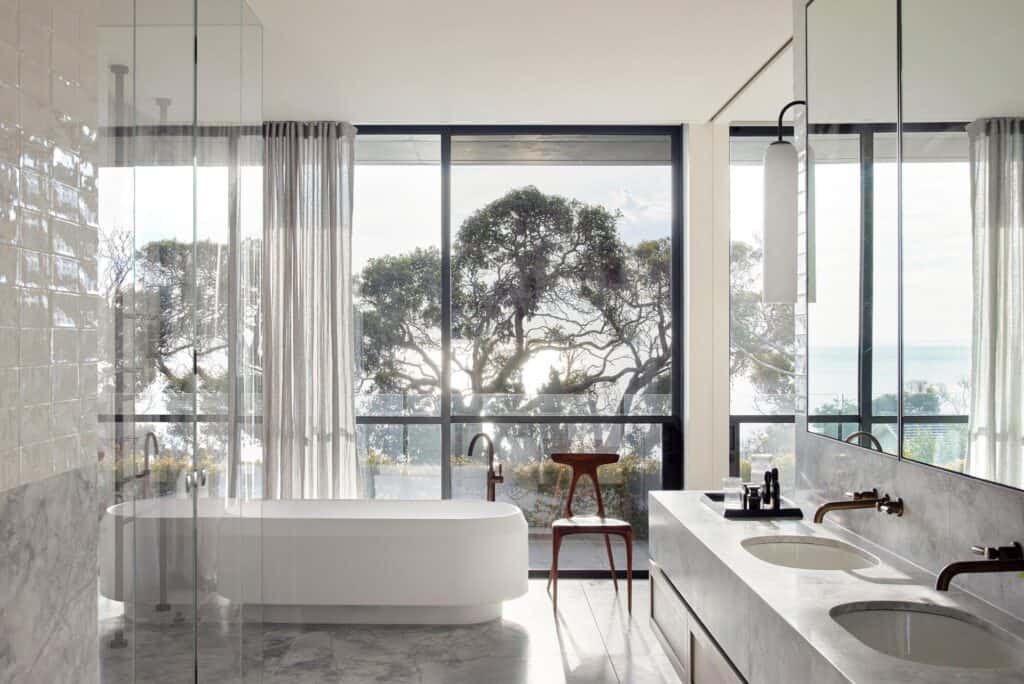
Architecture and interiors - @alesi_group, Builder - @alesi_group, Photography - @timothykay, Furniture, art and editorial styling - @karinbochnik_id
A shift toward warmth
The cool greys that have dominated interiors for much of the past decade are giving way to warm tones. This move in colour trend for 2026 does not mean bold colour statements, but rather using a range of nuanced tones that sit comfortably with materials like natural stone, timber and brushed metals.
Soft mineral shades, such as chalk, sand or oatmeal, create a soothing backdrop in spaces with travertine or pale oak flooring. These tones maintain lightness while adding depth and softness.
Greens continue to influence interiors, particularly in homes that integrate naturally with the landscape. Muted sage works beautifully in living areas that overlook gardens, while deeper forest tones add depth to double-height rooms or more formal spaces.
Terracotta and clay-inspired hues are appearing in projects featuring the warmth of timber and bronze finishes. Used carefully, they introduce a richness that complements architectural lines.
Darker browns, like espresso and walnut, are re-emerging favourites for studies and retreat spaces, offering a sense of stability and calm.
Rather than chasing colour purely for impact, the emphasis is on tonal cohesion, using fabrics with textures and hues that enhance the material story of the home and the lifestyles that take place within it.
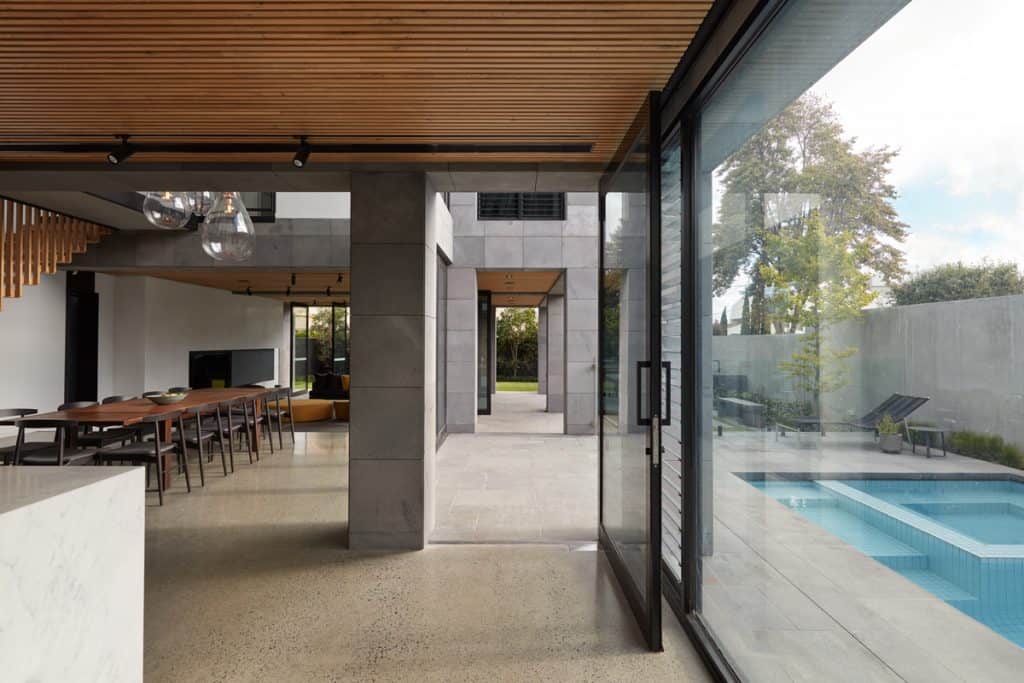
Architecture and interiors - @alesi_group, Builder - @alesi_group, Photography - @timothykay, Furniture, art and editorial styling - @karinbochnik_id
Texture as an architectural layer
Modern Australian homes often combine glass, stone and hard flooring surfaces to form clean lines and angles. Curtains provide the softness that balances these elements.
Linen remains a leading choice for contemporary residences. Its relaxed drape and ability to filter natural light complement coastal, minimalist and modern luxury home styles beautifully. When paired with quality linings and precise installation, the look of linen becomes elegantly tailored rather than casual.
Heavier woven fabrics and velvets suit larger living zones and media rooms where insulation and sound absorption are important. In these spaces, the fabric weight contributes both visual and functional elements.
Textured weaves, such as subtle bouclé and those with dimensional finishes like brocade, are chosen for restraint rather than novelty. They introduce interest without overwhelming the space.
In well-resolved interiors, texture works in the background to soften, absorb and enhance light throughout the day.
Fabric performance matters
In architectural projects, fabric selection is never purely aesthetic. Performance, longevity and design details are equally important.
Linen and cotton blends provide breathability and timeless appeal. When professionally lined, they offer privacy and improved thermal performance without compromising elegance.
Wool blends are gaining attention for their insulating properties and ability to add warmth to both heritage renovations and contemporary builds.
Sheer fabrics, including refined voiles, are frequently layered with blockout systems that allow filtered daylight while maintaining privacy at night. In homes with expansive glazing, this layering strategy is essential.
Well-constructed window furnishings made from polyester blends remain relevant for areas exposed to intense sunlight, as they maintain their structural stability and fade less over time.
The success of a curtain lies as much in its construction as in its fabric. The lining choice, heading style and track system all contribute to how well it performs and fits within the room.
Proportion and installation detail
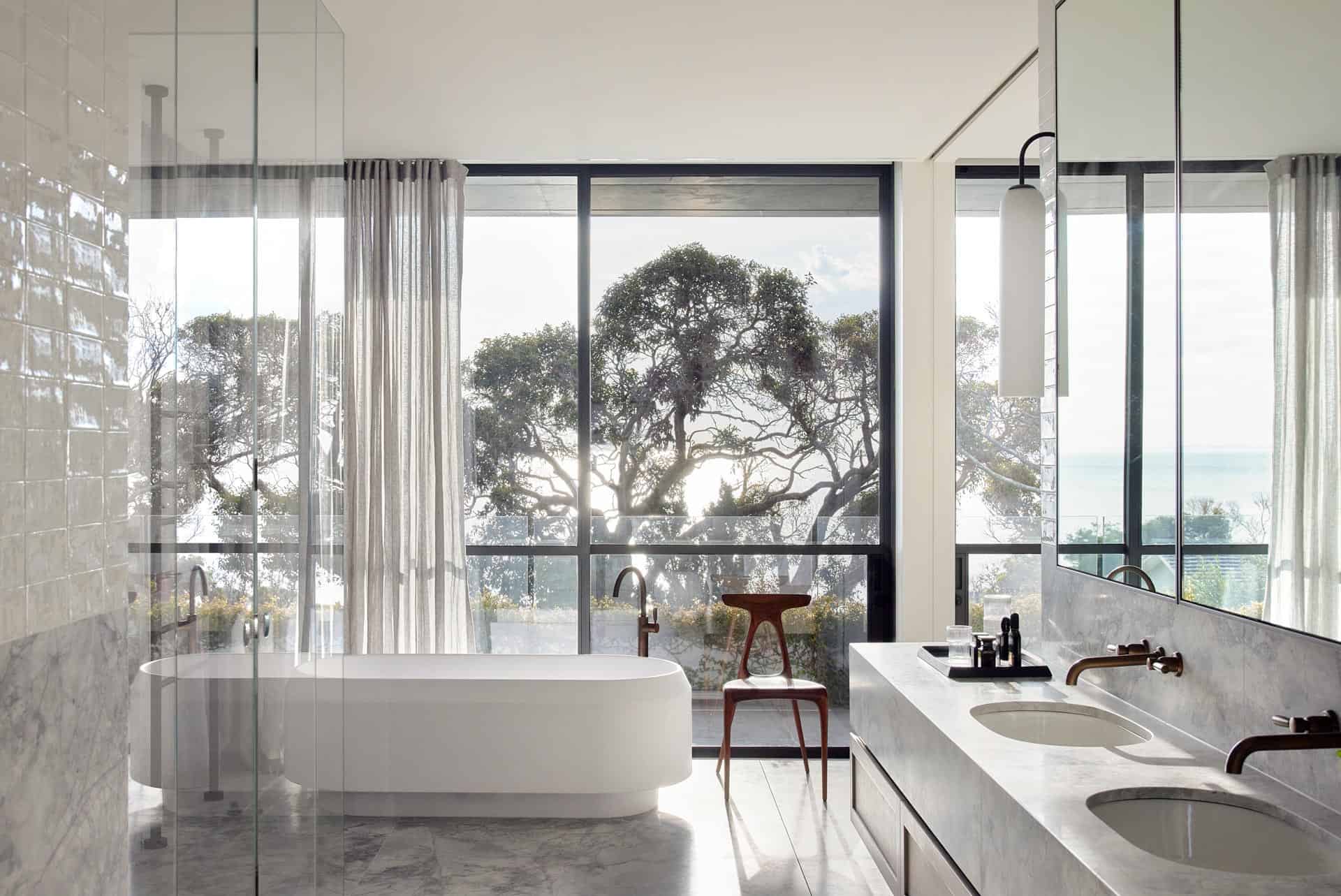
The most significant design improvements often come from installation detail. Mounting curtains from ceiling height, rather than directly above the window frame, elongates the space and enhances architectural proportion. In homes with higher ceilings, this approach adds refinement.
Increasingly popular are ceiling-recessed curtain tracks or concealed pelmets which give curtains clean lines against the room’s architectural features. The detailing required to achieve this look is ideally considered during the early construction phase for seamless integration.
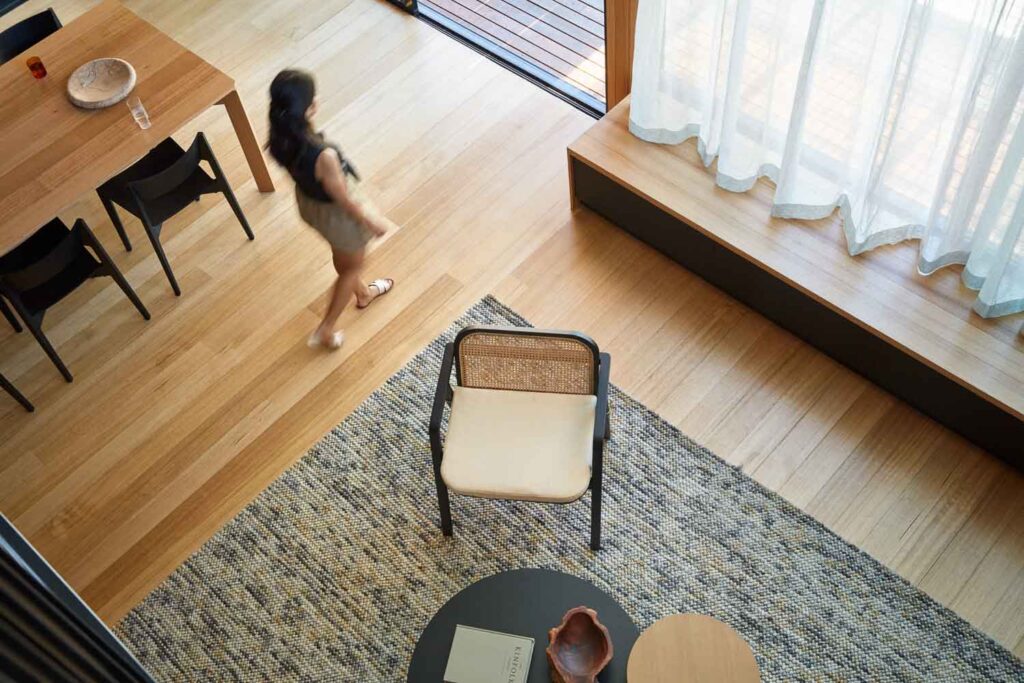
Architecture and interiors - @alesi_group, Builder - @alesi_group, Photography - @timothykay, Furniture, art and editorial styling - @karinbochnik_id
Architecture and interiors - @alesi_group, Builder - @alesi_group, Photography - @timothykay, Furniture, art and editorial styling - @karinbochnik_id
Heading selection influences both appearance and curtain movement. Contemporary homes often favour wave or S-fold headings for their consistent fold and structured profile. A tailored pleat that adds softness and formality may suit more traditional residences.
Allowing adequate stack-back space when planning how the framing will be constructed ensures that glazing remains unobstructed when curtains are open. This detail is frequently overlooked if not discussed during the early stages of the project.
Although these considerations are subtle, they distinguish a well-integrated installation from one that is a compromise.
Layering for comfort and control
Layering continues to define well-resolved window treatments in 2026. Combining sheer curtains and Roman Blinds provides flexibility in lighting, privacy and heat retention across seasons and times of the day. In some projects, discreet roller blinds that are installed behind curtains will enhance insulation without altering the visual appearance of the room. The objective is balance: softness with structure, privacy with light and function with refinement.
When designed carefully, layering of window furnishings uses products that can operate independently while creating a cohesive appearance in the room. Our custom design team can show you how to layer window treatments that work with the architectural elements to create the ideal style and functionality for each room.
Integrated motorisation
Motorised blinds and curtain systems are now common in luxury residential projects. When integration is planned early in consultation with the electrician and automation specialist, these systems remove the need for visible cords and allow large-scale curtains to operate smoothly and easily.
Automation also supports thermal performance by responding to sun position and time of day, particularly in homes with significant western or northern exposure.
For many homeowners, the appeal lies in the ease with which curtains can be opened and closed to become a natural part of the rhythm of daily life.
When motorisation of smart blinds and curtains is thoughtfully implemented and installed discreetly, it enhances convenience, without any visible unsightly elements.
Design that endures
The defining characteristic of 2026 curtain trends is restraint. Warm tonal palettes, tactile fabrics and carefully resolved detailing are shaping interiors that are composed and liveable, rather than styled and self-conscious.
For sophisticated homeowners and the design teams they work with, the priority is not passing fads but longevity, with window furnishings that will contribute to comfort, proportion and atmosphere for many years.
Personalise your curtains and blinds with the latest colour and fabric trends
At SOM Blinds, we collaborate closely with homeowners, architects, builders and designers to ensure curtains and blinds are considered early in the planning phase for seamless integration. From consultation through to installation, our focus is on customised solutions that elevate both the performance and the design integrity of each project.
To discuss your upcoming build or renovation, reach out to our team on 03 9808 1807 to learn more about our professional design consultation service.